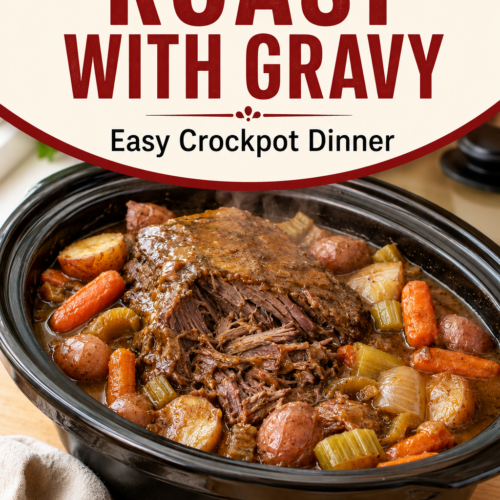
Gluten Free Roast with Gravy
This easy Gluten Free Roast with Gravy is the ultimate comfort food dinner. A tender ribeye roast cooks slowly in the Crockpot with red potatoes, baby carrots, celery, onion, garlic, and simple seasonings before everything is finished with a rich homemade gluten free gravy.
Equipment
- Slow Cooker (Crockpot)
Ingredients
- 4 –5 pound chuck roast
- 3 celery stalks cut into large chunks
- ½ bag washed baby carrots
- ½ yellow onion cut into large chunks
- 1 pound small red potatoes
- 2 cups water
- 1 tablespoon minced garlic
- 1½ teaspoons sea salt
- ½ teaspoon coarse ground black pepper
- Avocado oil spray
- 2 tablespoons grass-fed salted butter
- 3 tablespoons gluten free flour for the roux
- 2 tablespoons gluten free flour for thickening
Instructions
- Spray a griddle or large skillet with avocado oil and heat it over medium-high heat.
- Add the roast and brown it on all sides. This step adds color and flavor but does not need to cook the roast completely.
- Place the red potatoes, carrots, onion, and celery in the bottom of a large Crockpot.
- Place the browned roast on top of the vegetables.
- Pour two cups of water over the roast. Add the minced garlic, salt, and black pepper.
- Cover and cook on high for approximately 6½ hours, or until the roast and vegetables are tender.
- Melt the butter in a small saucepan over medium-low heat.
- Stir three tablespoons of gluten free flour into the melted butter until smooth and completely combined.
- Add the roux to the Crockpot. Sprinkle in the remaining two tablespoons of gluten free flour and carefully stir the cooking liquid until combined.
- Cover and cook on low for an additional 30 minutes, or until the gravy has thickened.
- Taste the gravy and add more salt or pepper if needed.
- Slice or shred the roast and serve it with the vegetables and gluten free gravy. Pair it with homemade gluten free mac and cheese for the ultimate comfort-food dinner.
Notes
- Kentucky Kernel Gluten Free Seasoned Flour is my favorite flour for this gravy. The brand also makes wheat-based products, so verify that you purchase the package specifically labeled gluten free.
- For a richer flavor, replace the water with two cups of gluten free beef broth.
- If you prefer broth instead of gravy, omit the butter and all five tablespoons of flour.
- Add more salt and pepper according to your taste.
- Cooking times can vary depending on your slow cooker and the size of the roast.
- The roast should reach a minimum internal temperature of 145°F followed by a three-minute rest. For a fall-apart tender roast, it will typically need to reach a higher temperature.
Tried this recipe?Let us know how it was!